


25,20€
En stock
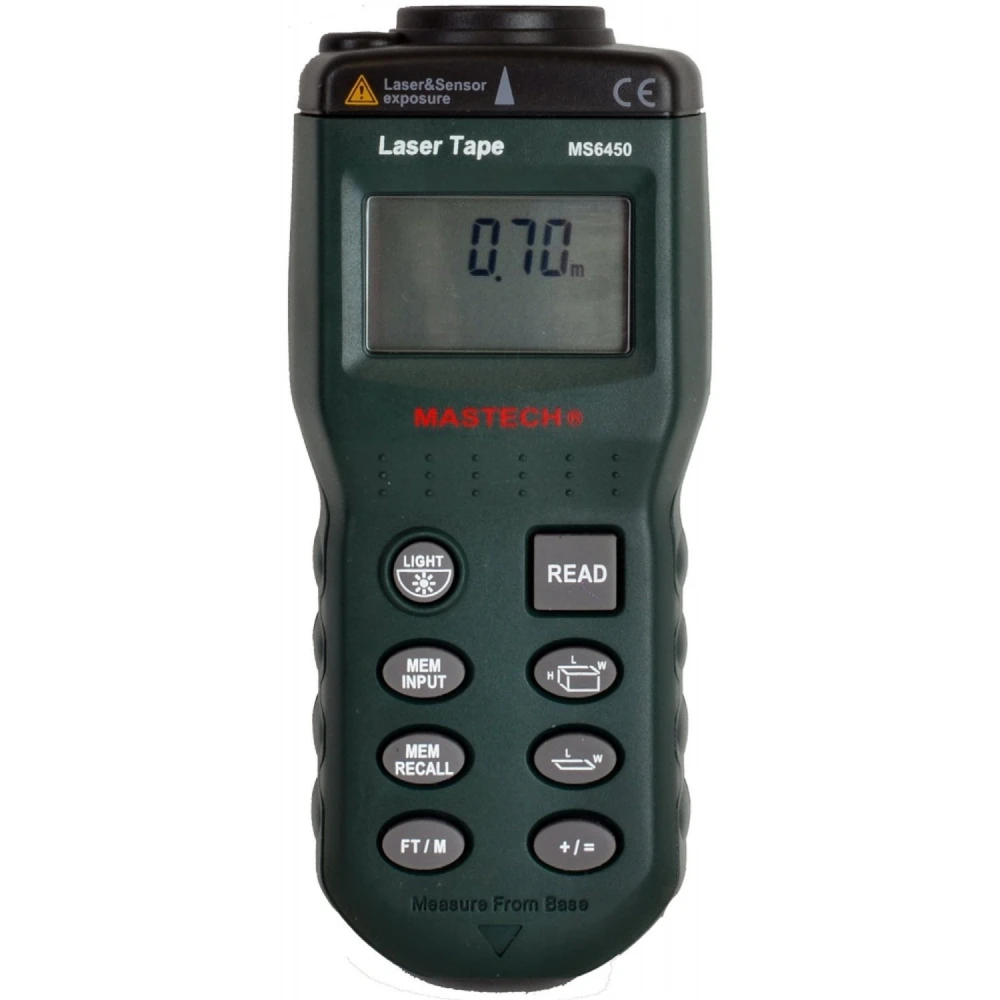
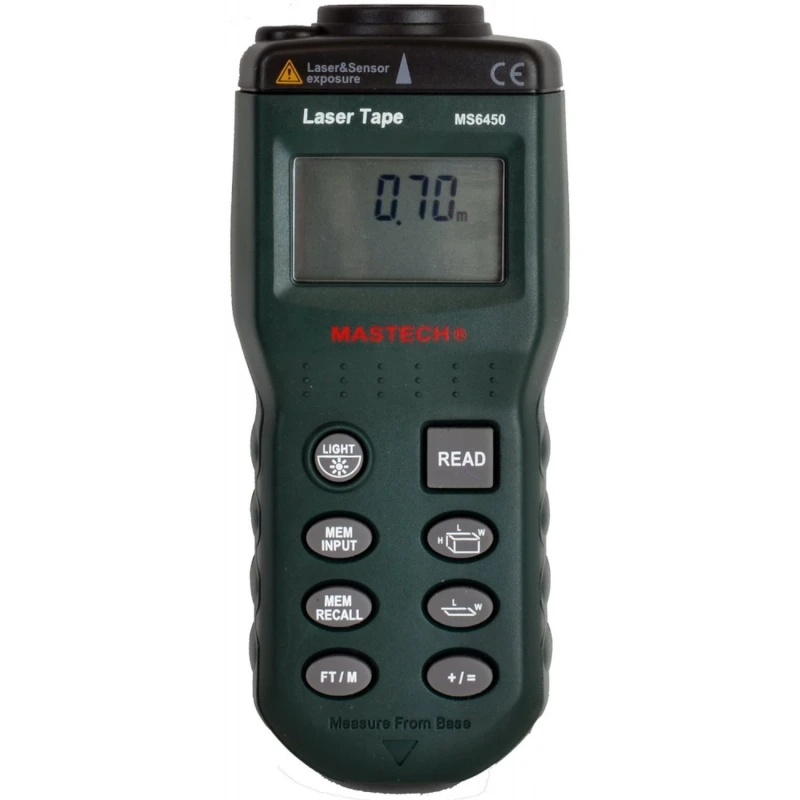
Télémètre à ultrasons Mastech MS6450 avec pointeur laser
Marque : Mastech
25,20€
TVA incluse (HT : 21,00€)
Stock limité
Livraison standard
Mer, Avr 22 - Ven, Avr 24
Livraison express
Lun, Avr 20 - Mar, Avr 21
Retours sous 30 jours
Retours gratuits sous 30 jours
Transaction sécurisée


Share:
Livraison gratuite
Pour les commandes de plus de 300€
Retours faciles
Politique de retour de 30 jours
Paiement sécurisé
Paiement 100% sécurisé
Garantie de qualité
Produits d'origine uniquement
Le Télémètre à ultrasons avec pointeur laser Mastech MS6450 est un instrument de mesure conçu pour offrir précision et facilité lors de la prise de distances dans différents environnements. Grâce à sa technologie à ultrasons combinée à un pointeur laser rouge, il permet de mesurer avec précision des points spécifiques de 0,6 à 15 mètres.
Caractéristiques principales :
- Modèle : MS6450
- Plage de mesure : 0,6 à 15 mètres
- Précision : ± 0.5% ± 1 dígito
- Résolution : 0,01 mètres
- Angle d'ouverture : environ ± 5 degrés
- Type de diode laser : Rouge 650nm
- Source d'alimentation : 1 batterie 6F22 (9V)
- Autonomie de la batterie : jusqu'à 10 heures d'utilisation continue
- Calcul de surface et de volume : Oui, permet de mesurer facilement les surfaces et les volumes
- Mesure en pieds ou en mètres : configurable selon le besoin
- Écran rétroéclairé : facilite la lecture dans les environnements peu éclairés
- Dimensions : 136 mm × 59 mm × 38 mm
- Poids : environ 150 grammes, batterie incluse
- Plage de calcul maximale : longueur 9999 m, surface 99999 m², volume 99999 m³
Utilisations typiques :
- Mesure rapide et précise des distances dans le bâtiment et la rénovation.
- Calcul des surfaces et des volumes pour des projets d'architecture ou d'ingénierie.
- Mesure en intérieur et en extérieur grâce à son pointeur laser.
- Idéal pour les techniciens, installateurs et professionnels qui ont besoin de mesures fiables.
Compatibilité et facilité d'utilisation :
Le télémètre Mastech MS6450 est compatible avec les mesures en pieds ou en mètres, réglable selon la préférence de l'utilisateur. Son écran rétroéclairé permet de travailler dans des conditions de faible luminosité, et sa batterie de 9V offre une autonomie prolongée pour les travaux continus. De plus, son design compact et léger facilite son transport et sa manipulation.
Cet appareil est une solution économique et efficace pour ceux qui recherchent un télémètre électronique pas cher sans sacrifier la précision et les fonctionnalités.
- Plage de mesure de 0,6 à 15 mètres avec une grande précision
- Pointeur laser rouge 650nm pour plus de précision
- Calcul de surface et de volume intégré
- Écran rétroéclairé pour une lecture facile dans les environnements sombres
- Alimentation par batterie 6F22 (9V) avec jusqu'à 10 heures d'autonomie
- Mesure configurable en mètres ou en pieds
- Design compact et léger, poids d'environ 150 grammes
Questions & Réponses des clients
What types of surfaces can affect the accuracy of the MS6450 ultrasonic distance meter?
Soft, absorbent or irregular surfaces (such as curtains, carpets or textured walls) can reduce the accuracy of the MS6450, as ultrasound requires a hard, flat surface to reflect properly. For best results, it is recommended to measure on smooth, solid walls.
Does the MS6450 backlit display allow clear reading outdoors or in strong sunlight?
The backlit display makes it easy to read indoors or in low-light conditions, but in direct sunlight visibility may be difficult, as it does not have high contrast designed specifically for outdoor use. It is recommended to shield the display from direct sun when taking measurements outdoors.
What is the absolute accuracy of the MS6450 at its maximum range of 15 metres, and how is that tolerance calculated?
The MS6450 offers electronic accuracy of ±0.5% of the measured value plus ±1 digit. For example, at 15 m, the maximum error margin would be 0.5% x 15 m = 0.075 m, plus 0.01 m for the digit, giving a total of ±0.085 m. The maximum expected tolerance is ±8.5 cm at maximum distance.
Is it possible to replace the MS6450 battery easily, and what is the main precaution to take?
The 9V (6F22) battery can be replaced easily by removing the rear cover. It is recommended to use quality alkaline batteries and avoid mixing old and new batteries. Make sure the meter is switched off before changing the battery to avoid accidental short circuits.
How does the MS6450 ultrasonic system compare with laser distance meters in terms of technical limitations?
Unlike laser distance meters, the MS6450 depends on the propagation and reflection of sound, which means lower accuracy and range (maximum 15 m), and greater sensitivity to environmental conditions. A laser distance meter can reach greater distances (up to 40 m or more) and maintain an accuracy of ±2 mm under almost any reflective surface condition, although it is usually more expensive.
What types of surfaces can affect the accuracy of the MS6450 ultrasonic distance meter?
Soft, absorbent or uneven surfaces (such as curtains, carpets or textured walls) can reduce the accuracy of the MS6450, as ultrasound requires a hard, flat surface to reflect properly. For best results, it is recommended to measure on smooth, solid walls.
Does the MS6450 backlit display allow clear reading outdoors or in strong sunlight?
The backlit display makes reading easier indoors or in low-light conditions, but in direct sunlight visibility may be difficult, as it does not have high contrast designed specifically for outdoor use. It is recommended to shield the display from direct sun when taking outdoor measurements.
What is the absolute accuracy of the MS6450 at its maximum range of 15 metres, and how is that tolerance calculated?
The MS6450 offers electronic accuracy of ±0.5% of the measured value plus ±1 digit. For example, at 15 m, the maximum error margin would be 0.5% x 15 m = 0.075 m, plus 0.01 m for the digit, giving a total of ±0.085 m. The maximum expected tolerance is ±8.5 cm at maximum distance.
Is it possible to replace the MS6450 battery easily, and what is the main precaution to take?
The 9V (6F22) battery can be replaced easily by removing the rear cover. It is recommended to use quality alkaline batteries and avoid mixing old and new batteries. Make sure the meter is switched off before changing the battery to avoid accidental short circuits.
How does the MS6450 ultrasonic system compare with laser distance meters in terms of technical limitations?
Unlike laser distance meters, the MS6450 depends on the propagation and reflection of sound, which means lower accuracy and range (maximum 15 m), and greater sensitivity to environmental conditions. A laser meter can reach greater distances (up to 40 m or more) and maintain accuracy of ±2 mm under almost any reflective surface condition, although it is usually more expensive.
Écrire un avis client
Les clients ayant acheté cet article ont également acheté
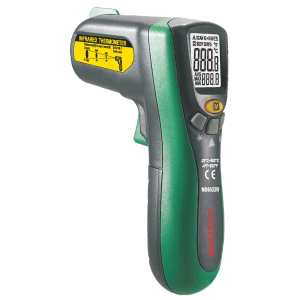
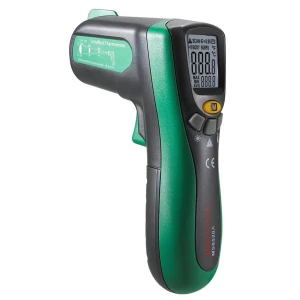
Thermomètre infrarouge Mastech MS6520A avec pointeur laser (-20°C à +300°C)
25,67€
Plus que 4 en stock
Vos articles récemment consultés
Façade Xbox 360 camouflage beige marron pour personnaliser votre console Xbox 360
2,40€
Rupture de stock
Télémètre à ultrasons Mastech MS6450 avec pointeur laser
25,20€